Solar Panels
Solar panels are innovative systems designed to transform sunlight into practical, usable electrical energy. They’re the core of every solar power system and play a vital role in producing clean, renewable energy. By capturing sunlight and turning it into electrical power, solar panels help reduce dependence on fossil fuels and lower electricity costs for homes and businesses.
Solar panels convert sunlight into usable electrical energy.
They are essential components of solar power systems that generate clean, renewable energy.
Solar panels reduce reliance on fossil fuels and help lower electricity costs.
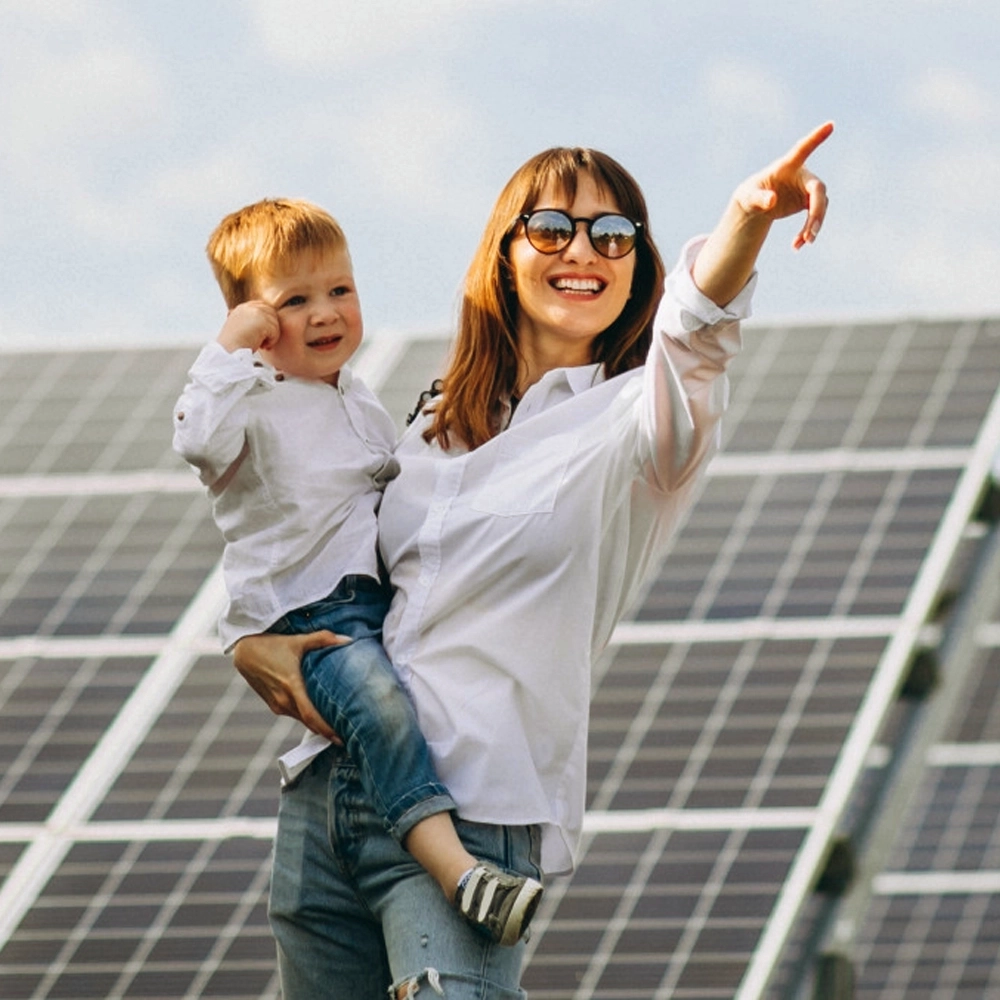
Solar panels are installed at angles that help them absorb the maximum sunlight throughout the day. Each cell captures photons from the sun, which dislodge electrons from their atoms.
The freed electrons move through the material, creating electric flow known as direct current (DC). However, most systems in homes and businesses use alternating current (AC).
To make the electricity usable, an inverter converts DC power into AC. This conversion ensures the energy can safely run household appliances, lights, and devices.
Once converted, AC electricity flows into your building’s panel, powering systems. Excess energy can be stored or sent to the grid through net metering, earning credits or lowering bills.
In setups with battery storage, unused electricity is stored for nighttime or cloudy days. This helps maintain continuous power and improves energy independence.
Modern solar systems include tools that track energy production and performance. Regular cleaning and maintenance ensure panels operate efficiently and deliver output.
Produces zero emissions and helps fight climate change.
Reduces monthly electricity expenses significantly.
Provides independence from unpredictable grid electricity and rising costs.